
7 hr 30 min
Danube Bend Day Cruise: Budapest to Szentendre
Sail through scenic river valleys to a charming artists' town, with flexible探索 time and optional guided experience.
Reserve


Hand-picked by our editors — only the best 5 water-based experiences from 28 reviewed.
Verified partners for every tour, free cancellation where available, and instant confirmation on every booking.
7 hr 30 min
Sail through scenic river valleys to a charming artists' town, with flexible探索 time and optional guided experience.
Reserve
9 hr
Journey through three historic riverside towns with medieval castles, Hungary's grandest basilica, and baroque charm.
Reserve
9 hr
Discover three historic riverside towns, cruise back to Budapest by boat, and savor a traditional Hungarian meal
ReservePrices from verified partners. Availability updates in real time at checkout. Free cancellation policies apply where shown.
The landmarks, rooms, and views travelers on this tour remember — all visible on a single visit.
This massive neoclassical cathedral is the largest in Hungary and dominates the river view from the water. It houses the largest altarpiece in the world painted on a single canvas.
Once a seat of Hungarian kings, the ruins reveal extensive medieval architectural detail. The complex dates back to the 14th century.
This fortified tower is a prominent part of the Visegrád defense system. It stands near the river and offers a clear view of the Danube bends.
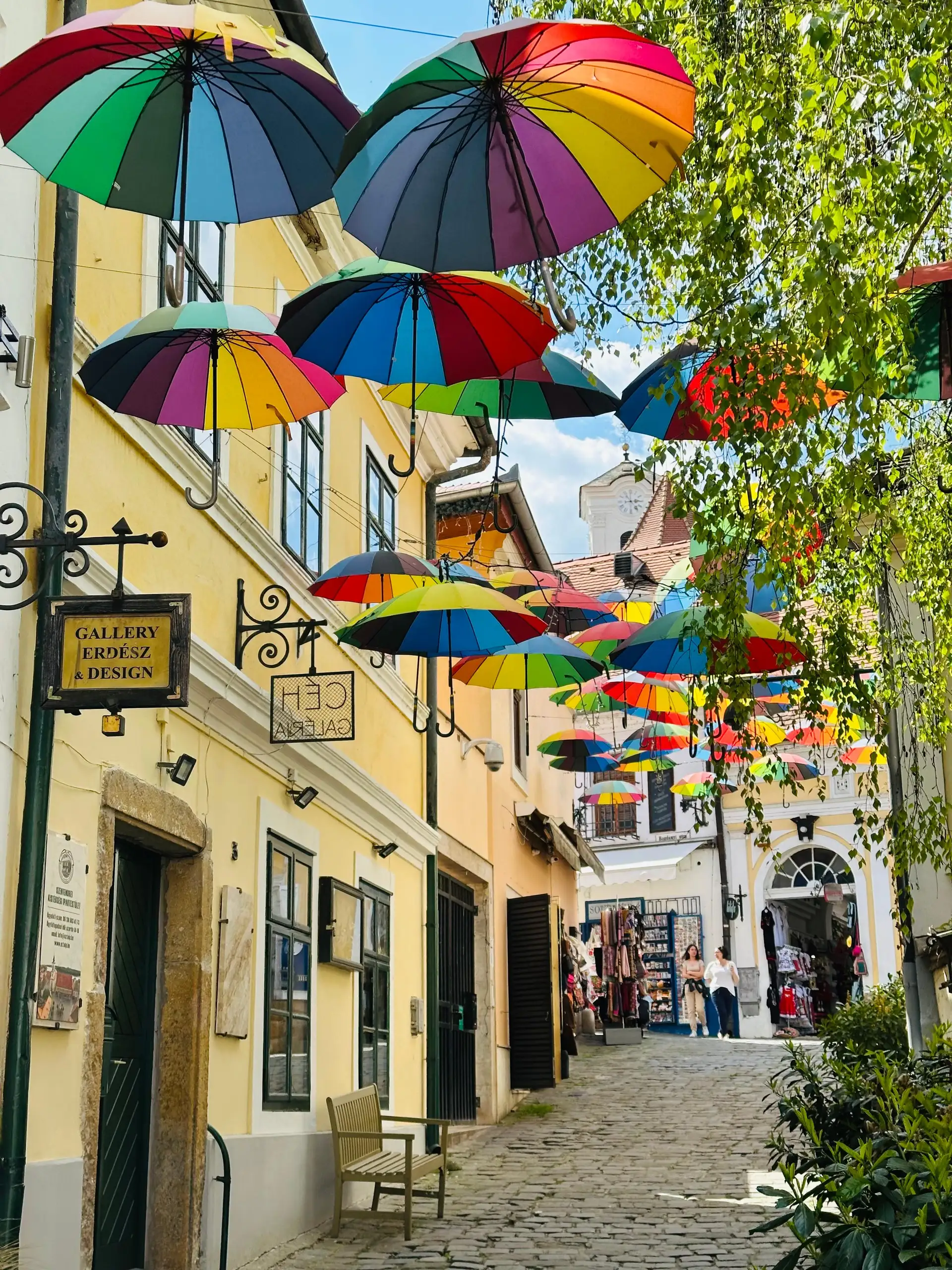
Famous for its baroque architecture and cobblestone streets, this town is a major cultural hub. It features numerous small galleries and churches.
Perched high on a hill, this fortress provides a wide panorama of the river valley. The site includes reconstructed historical exhibits.
The boat journey is ideal for those prioritizing panoramic river vistas, while the train and bus network is superior for travelers who require maximum schedule control. Opting for a danube bend day trip from budapest by boat provides a unique perspective of the river valley, whereas land-based transport serves as a more efficient link for those seeking rapid, independent transit to regional landmarks.
| Feature | Top pick Boat Transit | Train/Bus Transit |
|---|---|---|
Travel Experience |
Scenic river cruise | Functional public transport |
Flexibility |
Fixed departure times | High frequency and choice |
Travel Time |
Approximately 1.5–3 hours | 1–1.5 hours |
Sightseeing Opportunities |
Direct river views | En route via land scenery |
Cost |
7,000 HUF (Return) | Approx. 2,000–3,000 HUF (Return) |
Comfort |
Seated with deck access | Standard seating |
| See tickets → |
Verdict: Choosing between these danube bend day trip from budapest by boat tours and land transport depends on whether one values a leisurely river experience or the convenience of frequent, low-cost danube bend day trip from budapest by boat tickets for a self-guided danube bend day trip from budapest by boat tour.
Choose your ticket, select your date, and reserve in under two minutes. Secure checkout handled by our verified partner.
Instant confirmation by email, with a mobile voucher you can save offline. No printing, no queuing at a collection desk.
Arrive at the entrance, show your voucher on your phone, and walk in. Most tickets include priority or skip-the-line access.
Practical details for your visit straight from our verified partners — hours, access, rules, and how to get there.
Vigadó tér 5, 1051 Budapest
Main port for Mahart Passnave
Use Tram 2 to Eötvös tér stop near the Vigadó tér port.
From Deák Ferenc tér, walk 10 minutes toward the Danube.
Casual summer clothing is appropriate for a danube bend day trip from budapest by boat. Comfortable footwear is recommended for exploring hilly terrain at the destination stops.
Passengers are restricted to one piece of hand luggage on most vessels. Security checks may occur at the Vigadó tér boarding point.
Handheld photography is permitted throughout the voyage and at riverside landmarks. Tripods require prior permission from the boat crew.
Vessels vary in accessibility; travelers with mobility issues should confirm ramp availability. Many historic sites along the Danube Bend have uneven cobblestone paths.
Mobile phone use is permitted, though service may be intermittent in forested sections of the river valley. Charging ports are limited.
Families are welcome, though child life jackets must be worn during the cruise. Strollers should be foldable to navigate boat decks.
Most boats feature a snack bar serving coffee, water, and local snacks. Bringing a reusable water bottle is recommended during hot August days.
Small dogs in travel carriers are generally accepted on board. Large animals are typically not permitted on public river transport.
The return boat ticket per adult is 7,000 HUF. Always check the official site for real-time schedule updates.
Best time to go, insider tips, nearby landmarks, and the cancellation fine print — flip through to skim what matters to you.
How crowds, weather, and events shift across the year.
Mild weather perfect for walking along the riverbank in Szentendre.
Peak time for a danube bend day trip from budapest by boat with extended daylight.
Fewer crowds and colorful foliage along the Danube Bend hills.
Limited operations, mostly restricted to holiday themed cruises.
Small details that turn a good visit into a great one.
Arrive between 08:30–10:30 to secure seating.
Upper decks offer no shade from the sun.
Use the official site to avoid long queues.
Space is limited on smaller transit boats.
Carry some cash for small purchases in town stops.
Non-bookable sights within a short walk — free to visit, easy to pair.
Neo-Gothic building on the riverbank.
Memorial to the victims of the Holocaust.
Iconic cathedral with panoramic city views.
Historic bridge connecting Buda and Pest.
Flexible, no hidden fees.
Requests must be submitted within the operator's specified window for refunds. The 7,000 HUF entrance fee for a return boat ticket per adult is generally non-refundable if the service is operational.
Hand-picked options within walking distance — pick a district for vibe, or a specific hotel for convenience.
Heart of the city near boarding points.
Trendy area with many cafes and hotels.
Vibrant neighborhood with diverse lodging.
The Danube carves a ninety-degree elbow forty kilometres north of Budapest, forcing the current against volcanic hills that rise three hundred metres from the water. This sweeping curve — the Danube Bend — has shaped Hungarian geography and power since Roman galleys first patrolled the limes, and today the riverbanks hold three towns whose spires and citadels tell a compressed story of Central European ambition. Szentendre clings to the right bank with Serbian Orthodox domes and pastel-washed merchants' houses that date to the eighteenth century, when refugees from Ottoman Belgrade rebuilt the settlement as a trading hub. Visegrád occupies the apex of the Bend, its Citadel perched on a basalt outcrop that once anchored the medieval Hungarian kingdom's most fortified palace complex; archaeologists have uncovered Renaissance fountain courts and marble banquet halls beneath the hillside forest. Esztergom, at the northern edge of the curve, houses the Primatial Basilica, whose green dome rises ninety-six metres and marks the seat of Hungarian Catholicism for a millennium. Water transit connects these sites the way it did in the fourteenth century, when royal barges moved between Buda and the Visegrád summer palace. Modern vessels depart from Vigadó tér on Budapest's Pest embankment, following the river's northern arc through the Pilis and Börzsöny ranges. The journey isolates travellers from highway noise and suburban sprawl, replacing them with heron-dotted reed banks and vineyard terraces that descend to the water. A Danube Bend day trip from Budapest by boat restores the original logic of the region: these towns were built to face the river, not the road, and their stone quays and ferry landings reveal themselves properly only from the deck of a vessel. The Bend's strategic value has always derived from its defensibility. The river's tight curve forced invading forces to slow and expose their flanks, and every power that controlled Hungary fortified this stretch. Roman watchtowers gave way to Árpád-dynasty stone keeps, then Ottoman cannon platforms, then Habsburg border posts. Today the hills are quiet, their military function replaced by weekend hikers and cyclists who trace the ridge paths above the water. The river itself remains Hungary's most trafficked natural corridor, carrying grain barges and passenger ferries in equal measure, and the same current that once carried siege engines now delivers visitors to cobbled streets where the eighteenth century remains legible in every façade.
"The Danube carves a ninety-degree elbow forty kilometres north of Budapest, forcing the current against volcanic hills that rise three hundred metres from the water."
A step-by-step walkthrough of the visit — what you'll see, how long each stage takes, and the details that matter.
You board at Vigadó tér, where the departure pier juts into the Danube beneath the concert hall's nineteenth-century façade. The vessel pulls away at half past eight, threading between Margaret Island and the Buda Hills as the city's stone embankments give way to willow groves and gravel banks. Within thirty minutes the urban skyline folds behind you, replaced by the green wall of the Pilis range rising on your right. Szentendre appears first, its church towers clustered on a low bluff above the waterline, and you disembark at the quay that once received Serbian merchants' barges laden with Balkan wool and wine. The boat continues north, and the river narrows as it bends west toward Visegrád. You pass beneath the Citadel's stone ramparts, visible through oak canopy six hundred feet above, and the captain slows to point out the submerged foundations of the lower castle, a Gothic complex that collapsed into the river during eighteenth-century floods. At Esztergom the vessel ties up below the Basilica, whose neo-Classical columns frame the northern horizon. You climb the quay stairs and cross the square to the crypt entrance, where medieval Hungarian kings rest in red marble sarcophagi beneath vaulted ceilings painted with frescoes of the Árpád dynasty. The return journey departs at five, the evening light turning the river bronze as you sail back through the Bend's tightening curve toward Budapest's illuminated bridges.
The office at Vigadó tér 5 is open from 08:30 to 18:15 Tue-Thu and 08:30 to 19:15 Fri-Sun.
A return boat ticket per adult is 7,000 HUF.
Yes, the best arrival window is 08:30–10:30 to secure optimal seating.
Yes, children are welcome on these river excursions.
Yes, you may bring light snacks and water, but the boat also offers a snack bar.
The operator will typically offer a rebooking or refund per their official policy.
Small pets in carriers are usually permitted on board.
You can reach the terminal via Tram 2 to the Eötvös tér stop.
Accessibility varies by vessel; please contact the operator for specific deck requirements.
Yes, photography is permitted, though tripods require advanced permission.